

America’s Top Independent Research Firm

World Biggest Marketplace

Top Developers Independent Research Firm

Top Mobile Development Market Place

Top B2B Research and Review Platform

Building Amazing Products

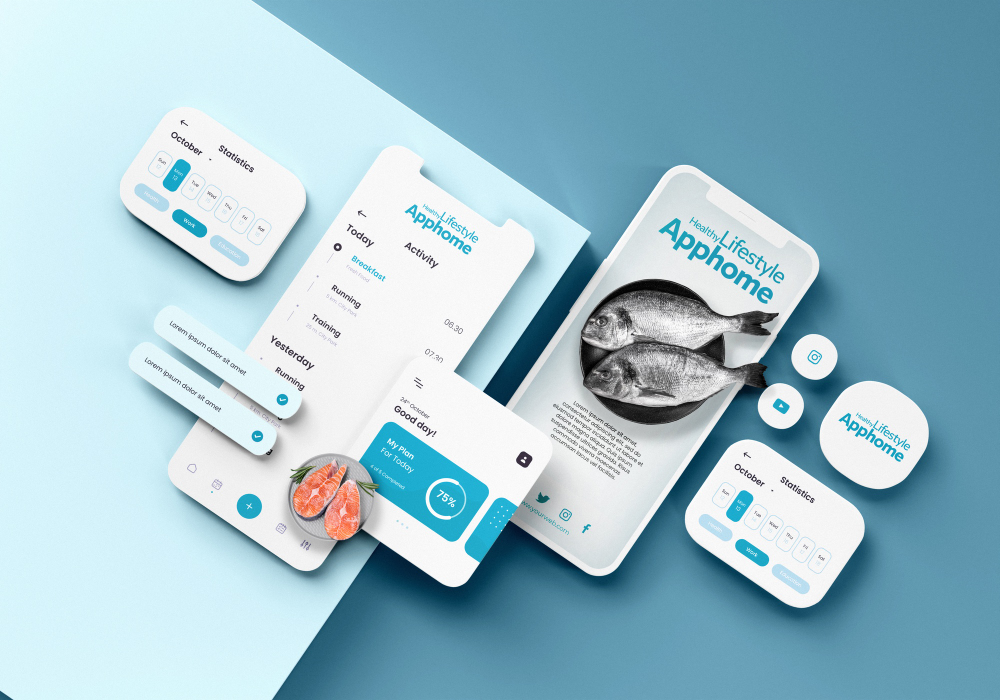
Understanding User Interface Design: The Art of Creating Intuitive and Engaging User Experiences

Understanding User Interface Design: The Art of Creating Intuitive and Engaging User Experiences

While user experience (UX) focuses on the overall experience that someone has on your website, user interface (UI) focuses on the overall look and feel of a website.

Despite their differences, these two elements usually work together and sometimes overlap.

User interface design is the process of providing a special look while maintaining functionality. The way a website, application, or system interacts with users, its overall design, and the various user interface elements informs someone to navigate the site and make decisions. It’s all about structure and communication.

Simply put, a user interface is the design of the user interface of a website or application designed to improve usability and enhance the user experience.

Why is interface design important to your business?

UI design is very important when developing a website or app and should never be overlooked.

Simply put, user interface design is one of the main ways to increase website traffic to achieve a higher conversion rate. This is what creates loyal customers by providing a good user experience on your site.

Small changes in user interface design can make a big difference.

Major changes, such as button shape, color, typography, or the way information is distributed, can make it difficult for people to stay on or interact with your site, making them leave your site.

Benefits of a Well-Designed Interface

Increase New Customers

Successful user interface design contributes to a positive user experience, becomes a competitive advantage, and acts as a key brand differentiator. Providing a good design will make your customers feel more comfortable using your app.

Thus, you can attract new customers and increase your sales accordingly.

Good user interface design is of great benefit to expanding your business and maximizing your income opportunities.

Improve Customer Engagement and Retention

An attractive user interface design helps increase engagement and retain existing customers. Designing a good interface that facilitates discovery and navigation can attract new users, prevent user frustration, and encourage more digital adoption.

This reduces bounce rates and increases conversion rates.

Brand Loyalty

As in the previous case, having an interactive and beautiful user interface design can increase customer retention and convince customers to remain loyal to you and your brand.

Increase Productivity 

When a product is well-designed and has a user-friendly interface that customers can navigate easily, search time is reduced and users can meet their needs faster and more efficiently. The result is better performance for both users and brands.

Reduce development and training costs 

Using a user-friendly and intuitive interface from the start will prevent future problems such as fixing navigation errors, tweaking the design to be more functional, or removing obsolete features. However, a well-designed interface creates fewer problems for designers, avoids extra costs, and saves time and effort.

Reduce customer support costs

Often when a website is difficult to understand, users express problems or concerns while navigating the interface.

But customers are less likely to get support if the interface is intuitive and practical. In this way, businesses can reduce customer service costs. A simple and well-designed interface avoids high customer service costs by minimizing possible errors and unnecessary actions during the browsing process.

Having a user-friendly interface is key to a successful online presence. Companies of all sizes should consider user interface design as an integral and fundamental part of their business strategy. Good UI design reduces problems, increases user engagement and retention, improves functionality, and creates a strong bond between customer and site.

For more information, please contact us at Coding Brains.


written by Faiz Akhtar for Coding brains section(s).

Can a Custom Mobile Application system support your business improvement?

Can a Custom Mobile Application system support your business improvement?

Custom mobile apps are on the rise – custom mobile apps are reported to save an average of 7.5 hours per employee per week and 82% of business owners believe it has helped them generate additional business revenue!

Custom mobile apps can be partially or fully personalized to suit your business requirements and necessities. These applications are tailored to appeal to a specific audience rather than providing a solution that suits a large group with different requirements.

According to researchers, this is the main reason why custom mobile app development is gaining momentum and proving to be an attractive option for 80% of businesses.

How can custom mobile app development benefit your business?

Today, businesses of all kinds, whether small, medium, or large, take advantage of customized business applications that help them stay competitive and increase productivity. Below are some of the most popular benefits of custom mobile app development which can change the way your business functions.

Improves efficiency:

Because enterprise applications are custom built with your business requirements in mind, it behaves like complex application performing multiple functions, negating the need for multiple applications. Because these apps are customized to fit your work style, they increase employee productivity and, in turn, ROI

It offers high scalability:

Common applications are built to handle a limited number of resources and processes. In case your business grows, these applications may not be able to handle the load. On the other hand, custom-made applications are created with all these parameters in mind and can be easily extended if needed.

It secures your application data:

General business applications usually may or may not have specialized security features that can put your business data at great and unrequired risk. A custom application built exclusively for your business can strengthen your data security system, as appropriate security measures will be taken care of during the development of the application according to your business needs.

Integrates with existing software:

General business applications can work very easily with your existing software and general Data. Custom apps are built with your current business software in mind, so they are guaranteed to integrate well and work without any bugs

Easy maintenance:

By using mainstream apps for day-to-day business operations, you risk being at the helm of an unknown mobile app developer. If the developer decides to terminate the application for any reason, all you have to do is find a new application and remove the existing operations. By creating your own trading app, you get complete control and don’t have to rely on others for anything

Improves customer relations:

Customized business apps allow you to send personalized updates about your products and services to your existing customers in real-time. In addition, it allows you to access client details and get feedback, which can use to improve long-term customer relationships

Facilitates acquisition of new client data:

Adding simple forms and surveys to your own mobile app can help you get the client information you need. In addition to being a discreet way of collecting data, it also saves time for clients and employees as they do not have to physically submit documents

Provides real-time project access:

When traveling, easy access to all work documents proves to be very useful. With a customized app for your business, you can easily sync your phone with your computer and have access to all your work documents, tasks, calendars, etc. Also, getting brochures and contracts to share with your clients is easy with your own business. application

Easy project management:

You can install your own apps to keep a real-time check on the progress and deadlines of your project. Updates can be sent as each phase of the project is completed and a billing cycle can be maintained for each phase of the project

Record digital files for accountability:

Ideas and thoughts about your customer can easily be captured on the phone and dictated. These recordings can then be directly stored in secure locations and only authorized personnel have access to them. This can help in enhancing your accountability and also serve your customers better and up to date with time.

For more information on the Custom Mobile application support systems please contact us at Coding Brains.


written by Faiz Akhtar for Coding brains section(s).

Choosing the Best Ecommerce Platform: 7 Tips for You to Jump on Online Sales

Choosing the Best Ecommerce Platform: 7 Tips for You to Jump on Online Sales

From gourmet dog treats to yoga classes, you can sell anything online through the eCommerce platform.

Global online shopping sales will exceed $6.3 trillion by 2024. Whatever you sell, starting an e-commerce platform is a quick and easy way to make a dollar.

Based on this number, it’s a great time to jump on the online sales bandwagon and promote your products and services.

Before we jump in, let us look at our online store goals. What you need now to be a successful online eCommerce platform is different from what you’ll need later for your website.

1) Pricing plans and payment options:

Choose the best plan for your eCommerce platform.

A successful business starts with a good budget. Build exactly what you need for your online store to avoid the shiny object syndrome.

However, it is a good idea to compare each price level with your future online business goals. Then you won’t be stuck on a website with crazy fees.

  • Do you need specific marketing accessories?
  • What features or services can wait until later?
  • Which features cost money on one level but not on another?
  • Do you need specific shopping cart features?

2) Get along with other online platforms:

Customers will return to your online store if it is user-friendly. That’s the whole point of how e-commerce works.

Wherever you have an online presence is where you want your products or services to be. This included social media and brick-and-mortar sites.

If you love going behind the scenes on your website and creating the perfect custom page, make sure the platform gives you the freedom you need for the process.

If software trading is giving you nightmares, make sure you like the templates that the e-commerce site has to offer. Connecting all your social media, marketplaces and retail outlets should also be a breeze.

Let’s not forget the A-word: analytics. Even if you’re not sure how it works, it never hurts to have information about your customer. See if the store includes analytics features to stay in the loop.

3) Appear on Google Search:

93% of online activity starts with a search. It’s all about keywords my friend. You want customers to find you instantly. The built-in SEO tools are great for getting you in the search engine.

It’s okay if the term SEO makes your brain hurt – you’re not alone. Many platforms have easy-to-use tools that walk you through everything step-by-step.

There are several areas that you need to highlight on your website for it to show up in a search engine. And if you have the right web tools, conquering Google search is easy.

One example of increasing customers and sales is adding a blog to your website.

4) Mobile friendly: 

Chances are you’re reading this on your phone. Your customers are even more likely to shop on their phones.

It might seem like a simple tip, but mobile viewing is often overlooked in site design. You want an eCommerce system that makes your store look great on any screen size. However, most of your online sales come from mobile screens.

Buying and selling from your phone are here to stay, so make sure your website attracts customers on the small screen.

5) Five-star customer support:

A system glitch can hurt your sales, even if it’s not your fault. You want a business platform with 24/7 emergency support.

6) Security of the transaction in the first place:

You don’t want to appear shallow, and that starts with choosing a secure eCommerce platform. It should follow all the rules so your customers feel safe handing over their credit card numbers.

Don’t forget the obvious. Protect yourself from software attacks. Businesses in the e-commerce industry should also not do things like sell your information or steal your identity. You know, basic nice human things.

7) Switch to e-commerce success:

Your e-commerce future is bright, and you’ll want plenty of options to grow your business. Look for stress-free upgrades to make your selling future easier. Keep a few things in mind when you become wildly successful and need to grow your business:

  • Are our data and software storage prices reasonable?
  • Are there questionable fees for upgrading your website?
  • Does it include email marketing tools?
  • In addition, is your business connected to other websites and social media?

Whatever e-commerce platform you choose, make sure you sell your goods and services on it. While you’re here, Coding Brains has put together a list of services we offer to make your online store a breeze. For more information, visit Coding Brains.


written by Faiz Akhtar for Coding brains section(s).

What is a Learning Management System? Does the current skill shortage crisis affect LMS?

learning management system

Did you know that approximately 83 percent of organizations currently use a learning management system?

The global market for learning management systems is expected to reach a value of $23.21 billion by 2023. But with the advancement of technology, there are constant questions about whether the learning management system is dead.

According to recent research, the majority of respondents (73 percent) reported that their use of a learning management system has increased in the past two years, suggesting that learning management system use is growing rather than stagnating.

So, what exactly is a learning management system? And why do I need it?

What is a learning management system? Basics:

A learning management system is a software application that provides a framework that handles all aspects of the learning process – it’s where you track your training content. Although it is most commonly called a Learning Management System, other names that may be used are a training management system, a learning activity management system, or even a learning experience platform (LXP).

A learning content management system (LCMS) is also sometimes confused with a learning management system. LCMS is software used to create and manage learning content.

A Learning Management System is designed to make life easier for those in charge of training and development – ​​for example, identifying and assessing individual and organizational learning goals, tracking progress toward meeting those goals, and collecting and presenting data to monitor the learning process.

In addition to delivering content, a learning management system can also handle things like onboarding, compliance, and skills gap analysis.

The connection between the systems allows for easier communication, so an administrator can log in just once, manage content and collaboration, and then seamlessly move training modules into the learning management system because everything resides on the same platform.

Why use a learning management system? Advantages:

If you’re wondering what a learning management system is and why you should get one LMS, let us discuss the advantages:

Cost savings: Training and education through a learning management system reduces employee travel, optimizes training and utilization expenses, and minimizes equipment and instructor costs. In terms of cost savings, the learning management system is a no-brainer.

Training Consistency: Training and course delivery through a learning management system is consistent because it is centralized. Delivers consistent quality training and learning to all employees by providing a single source of content, course materials, and guidance.

Easily track student progress and performance: Learning management systems allow companies to quickly generate training reports at the overall or user/student level. By utilizing a learning management system for eLearning courses and/or online training, trainers can easily track goal progress, knowledge gained, return on investment, and more.

Maintain legal compliance: Many industries may be required to train, assess and report for compliance purposes. Oil and gas, pharmaceuticals, communications, and construction are just a few of these industries. A learning management system can help you meet these legal and regulatory requirements.

In general, learning management systems have many more options than listed. However, these are the most popular selling points and the main identifiers of whether you and your organization can benefit from a learning management system.

Conclusion:

Is the learning management system dead? Not. With the current skills shortage crisis affecting several industries, the Millennial’s desire for continuous learning opportunities, and the lack of leadership skills in companies, the learning management system has a solid foundation for many years to come. For example, choosing the right learning management system for your business can lead to better employee retention, increased productivity, lower training costs, and better compliance. Coding Brains can help you build the right kind of Learning Management system for your company and help you grow at a much faster pace. To know more about this, please contact us at Coding Brains.


written by Faiz Akhtar for Coding brains section(s).

Modern POS System: Key features to know about to complete your research most effectively!

Modern POS System: Key features to know about to complete your research most effectively!

Your restaurant POS system is not just an invoicing machine that takes care of your daily transactions, order punching, and general operations. A modern POS system is endowed with many more functions that make it the most important technology in your restaurant.

The global POS software market is expected to grow in the coming years and reach a size of USD 42.5 billion by 2027.

In this article, we will cover the Key features of a restaurant POS system.

So let’s get started.

A modern POS system is loaded with features. We have compiled a list of the most effective ones for your business:

1) Handles key operations

The restaurant POS system takes over the role of your cash register. It takes care of key operations and we have mentioned them in more detail below.

Order punching: When a customer comes to your restaurant and places an order, their details are punched and passed on to the kitchen.

Printing of Kitchen Order Tickets (KOTs): A kitchen order ticket is generated after an order is placed and handed to the kitchen where the food is prepared and handed back to the front.

Billing and printing of receipts: Billing (including tax amounts that are automatically calculated) is generated when the order is handed over to the kitchen. The customer is then given a customer copy of the receipt.

2) Inventory management

Waste is a problem that plagues restaurants. The role of management is then to have an overview of the stock, monitor theft and make the necessary additions to the planning and purchasing process.

POS gives you all the information you need about your inventory. It keeps you up-to-date on inventory at any given time and keeps you up-to-date on where you are concerning your inventory.

3) Data analysis

Making sense of the data is important. POS system helps you shed light on all the numbers that matter to you. Whether it’s customer information or order details, you can use the analytics your POS provides to adjust your strategy.

4) Improving customer relationship management

A modern POS receives data from multiple sources. Once the data is aggregated, it needs to be interpreted correctly to launch the necessary campaigns into the contact databases. Your POS is also a great tool for getting an idea of ​​the tastes and preferences of individual and collective customers. This can further help you create campaigns in a more personalized way.

5) Integration with loyalty management

Loyalty points and programs are great ways to get customers to buy more from you. It motivates customers to repeat visits and become your loyal customers. The data indicate that restaurants with loyalty programs report higher average customer order values ​​compared to restaurants without loyalty programs.

6) Third Party Integration

When you run a restaurant, you may need to oversee orders from multiple channels. It can come through your company’s website, your IVR, or third-party aggregators like Zomato, Swiggy, Ubereats, etc. In that case, a central system would help you track orders from every channel and across all your restaurants.

7) Monitoring of employees

As a manager, it is important to monitor the activities of employees. With a POS system, employees will come across their time of entry and you can track their activity records to see if they have been on shifts regularly. It can also generate regular real-time employee performance reports to help you quickly evaluate them.

Conclusion: 

This concludes our list of key features that should be present in your restaurant POS system. We recommend that you do your research to see which one you’d rather go for when shopping at POS! Coding Brains can help in combining all these features for your POS system at a highly effective price. For more information, please contact us at Coding Brains.


written by Faiz Akhtar for Coding brains section(s).
 
Recent Posts
About Company

  • We are programming since 2011
  • Working Live U.S. Day Time 8:00 am PST to 6:00 PM
  • Combined Team Experience of more than 20 years
  • Strong Team of 85+ and growing rapidly
  • Top Product and Mobile Development Firm
  • Top Rated on Multiple Forms and marketplaces
  • We are just not Coders but Thinkers as well.

Request a Quote